Cultural heritage
The Pottery Heritage of Sifnos
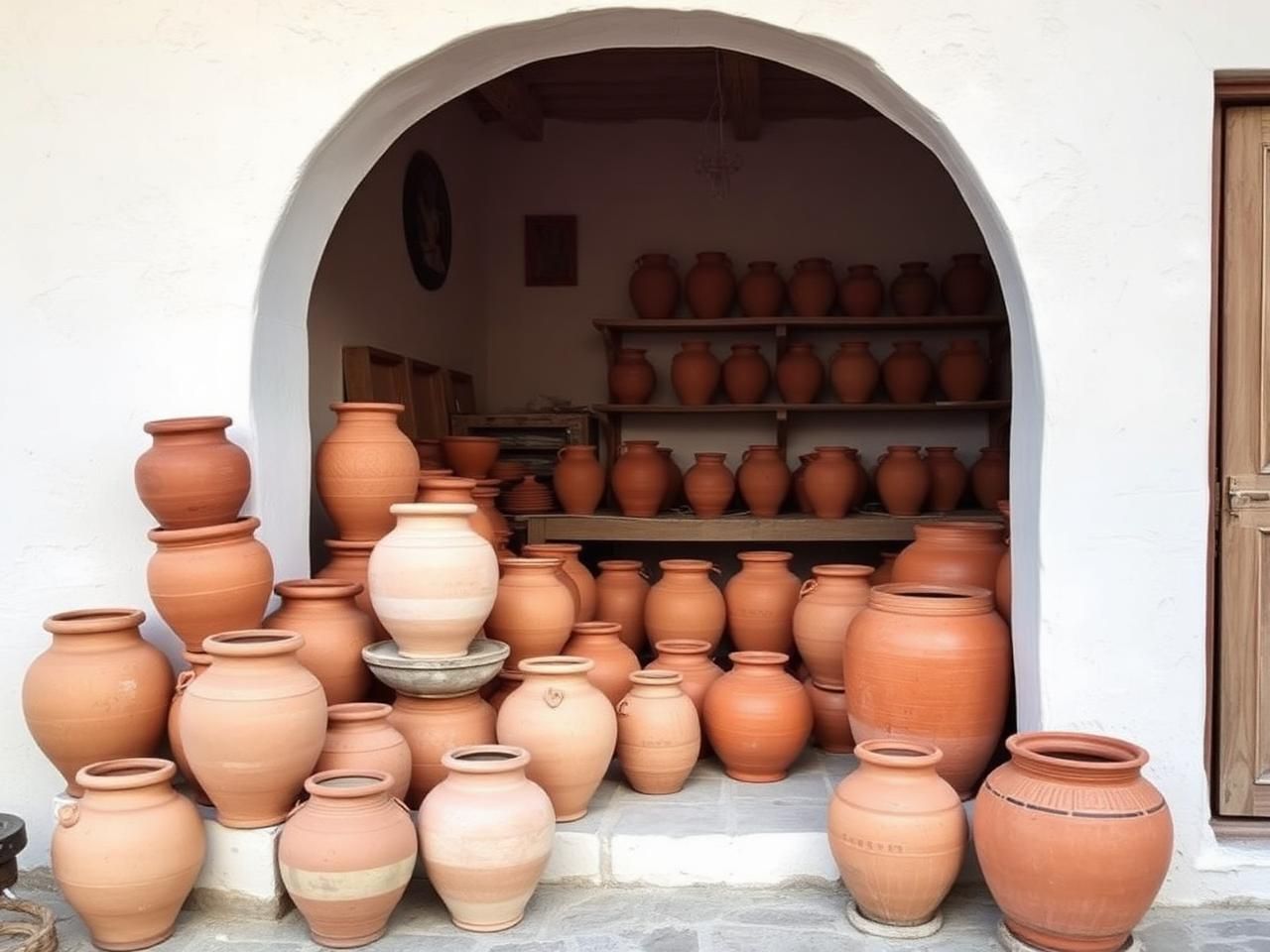
Sifnos has the longest unbroken pottery tradition in Greece — over 4,000 years of working with the same red clay. Here's the long story behind the workshops you see today.
Last updated: May 2026
Why Sifnos?
A perfect alignment of clay, wood and water.
Sifnos has soft, plastic, easy-to-throw red clay; just enough wood to fire the kilns; and a long, dry summer ideal for drying greenware. The same combination that supported Bronze Age potters still supports the studios working today.
Four thousand years on the wheel
3000 – 1100 BC
Bronze Age beginnings
The earliest dated pottery shards on Sifnos belong to the Early Cycladic culture, contemporaneous with the famous Cycladic figurines. Archaeologists have found Bronze Age kilns near Akrotiraki on the south coast — among the oldest in the Aegean.
525 BC
The wealth of silver
Sifnos's gold and silver mines made it one of the richest islands in the Aegean. Pottery was the everyday craft, but the wealth meant that techniques and clays were refined far beyond utility — Sifnian potters served export markets across the Cyclades.
Byzantine era
The mastelo and the tsoukali
The two clay forms Sifnos is still famous for took shape in the Byzantine kitchens of the island: the mastelo (a shallow lidded vessel for slow-baking lamb) and the tsoukali (the deep round pot for chickpea revithada). Both are sealed with bread dough and baked overnight in wood-fired ovens.
1700 – 1900
The Sifnian diaspora
From the late Ottoman period onward, Sifnian potters travelled the Greek world to set up workshops — Athens, Smyrna, Alexandria, even as far as Romania and the Crimea. For two centuries, if you bought clay cookware in the eastern Mediterranean, there was a good chance a Sifniot had thrown it.
1950 – 1990
The quiet decline
Plastic and metal cookware, and the slow depopulation of the Cycladic villages, almost ended the tradition. By the 1980s only a handful of working studios remained on the island — most of them in Vathi, then still reachable only by boat.
Today
A living craft
Sifnos still has around a dozen active studios — most family-run, several in the third or fourth generation. The mastelo and tsoukali are in demand again as Greek cuisine returns to slow, traditional methods, and visitors leave with stacks of clay pots wrapped in newspaper.
Studios still working today
Atsonios Pottery
Vathi
Three generations on the same wheel — best for traditional shapes and the iconic tsoukali.
Apostolidis Ceramics
Vathi
Modern Cycladic designs and beautiful earth-toned glazes.
Lembesis Workshop
Kamares
Right by the port — perfect for a stop on arrival or departure day.
Kalogirou
Artemonas
Functional cookware, including the famous Sifnian mastelo.