Beaches
The Best Beaches in Sifnos
There is no single best beach in Sifnos. Platis Gialos is the longest organised sand, Vathi the calmest horseshoe, Kamares the port swim. South and east coves sit out of most of the Meltemi; pack a hat for the wilder north and the hike-in pebbles.
Last updated: September 2026





Wind
South & east coasts are sheltered from the summer Meltemi. North coast can get rough in July–August.
Sea temperature
Swimmable May–October. Warmest in late August and September (24–25°C).
Getting around
Most beaches reachable by KTEL bus from Apollonia. A car or scooter unlocks the wilder ones.
Which Sifnos beach is best for you?
There is no resort strip. You pick a cove the way you pick a village: sand versus pebble, bus versus car, lunch versus silence. Open the numbered guides below when the name is right.
Families
Vathi, Platis Gialos and Kamares: sand, a shallow first step, and a taverna without a hike.
Organised sand
Platis Gialos is the longest Blue Flag stretch — sunbeds, watersports, dinner on the beach road.
Calm water
Vathi’s horseshoe, Fasolou at Faros, and Heronissos when the Meltemi is ugly elsewhere.
No car
Kamares from the ferry. Platis Gialos and Vathi on the KTEL from Apollonia in high summer.
Scenery
Chrysopigi (Apokofto) under the monastery. Seralia below Kastro. Late light, not a full beach day.
Wild coves
Fykiada on foot from Vathi or Platis Gialos. Vroulidia down from the north road. Poulati from Kastro.
The 10 best beaches in Sifnos
Vathi
South-west
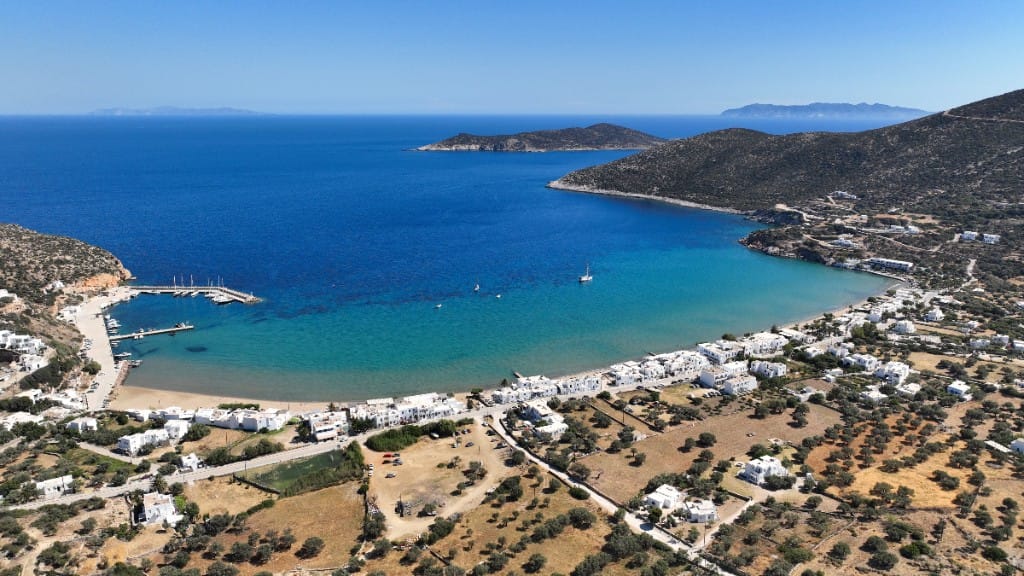
A horseshoe of soft sand and shallow turquoise water on the south-west coast. Until 2000 it was only reachable by boat, and it still has that off-grid, end-of-the-road feel. Three small tavernas, a tiny chapel built into the sand, and pottery studios at the edge of the bay.
Best for: Families, calm sea, all-day swimmers
View beach guide →Platis Gialos
South
The longest sandy beach on the island, lined with tavernas, hotels and sun-loungers. Sheltered from the Meltemi, gently shelving — the busiest beach in summer, but never truly crowded by Mykonos standards.
Best for: Beach holiday with everything on tap
View beach guide →Chrysopigi (Apokofto)
South-east
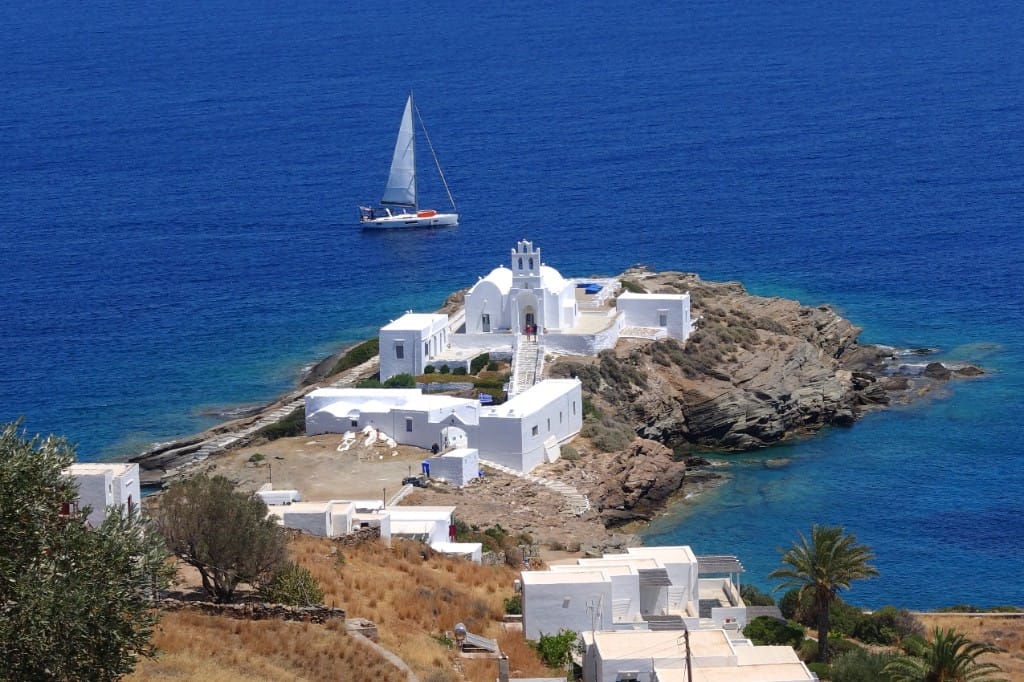
Sandy cove tucked under the iconic monastery on its rocky islet. Shaded by tamarisk trees and lapped by clear water — arrive in the late afternoon, swim, then watch the sun set behind the chapel.
Best for: Photographers, half-day visitors
View beach guide →Faros
East
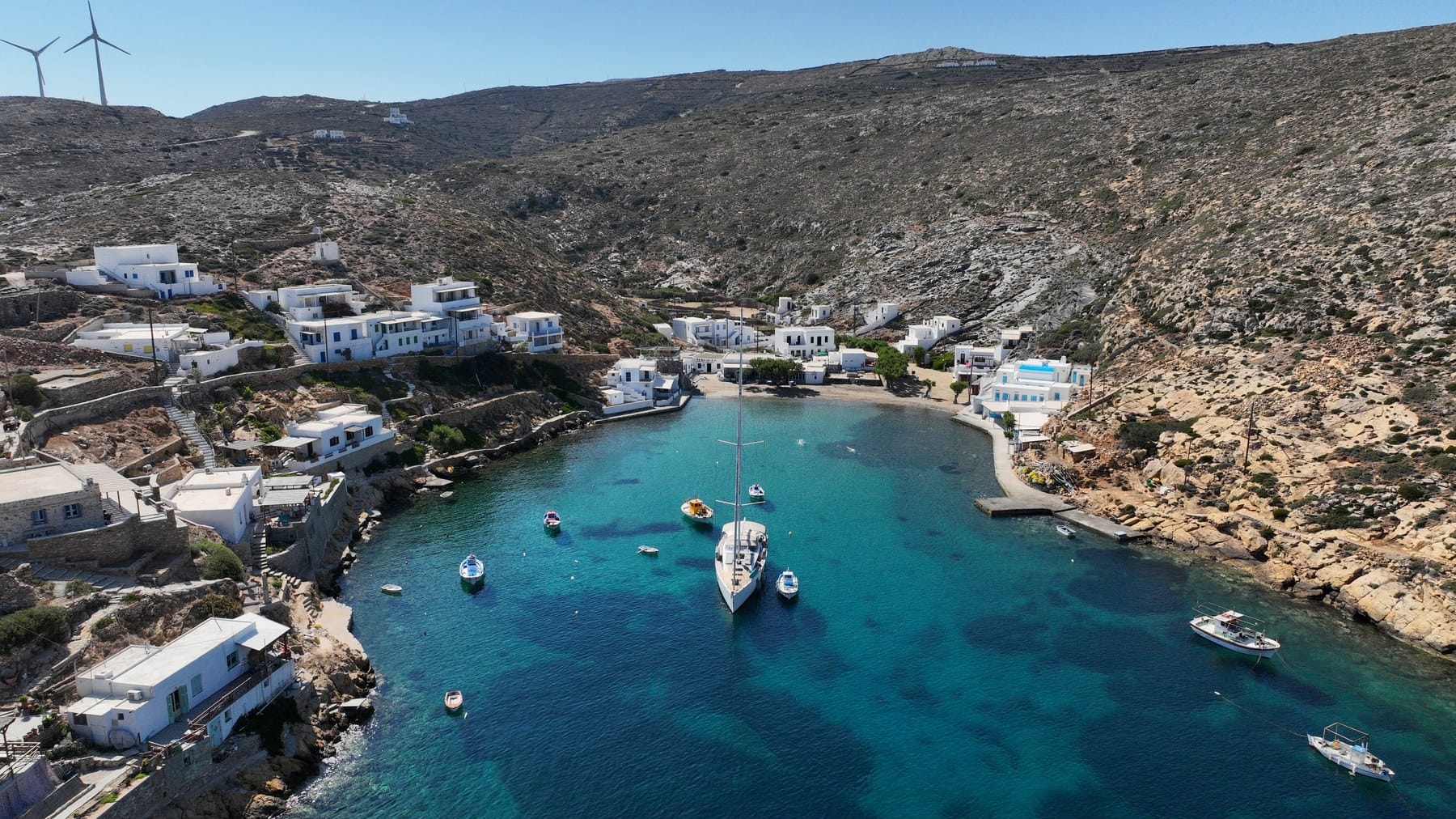
An old fishing harbour with three small beaches strung along the headland — Fasolou (sandy, shallow), Glyfo (pebbled, quiet) and the harbour beach itself. Fewer tourists, simple tavernas, very local feel.
Best for: Slow days, swimming + lunch + nap
View beach guide →Vroulidia
North
Wild, white-pebble beach in the north near Heronissos, reached by a 15-minute walk down from the parking. Deep clear water, often empty — bring water and a hat.
Best for: Solitude seekers, snorkelling
View beach guide →Kamares
North-west
The bay you arrive into. A long sandy beach right beside the port, with cafes and tavernas on the seafront and unbeatable sunsets across the bay. Surprisingly pleasant for a swim despite the ferries.
Best for: Arrival day, sunset drinks
View beach guide →Heronissos
North
Tiny fishing village at the very northern tip — a 30-minute drive on a winding road. A small sandy cove, two tavernas right on the water serving freshly caught fish, and almost nobody.
Best for: Long lunch + swim, foodies
View beach guide →Poulati
East
Pebble beach below the Poulati monastery, reached by a short hike from Kastro. Deep, crystal-clear water (good for snorkelling) and almost no facilities — bring everything you need.
Best for: Walkers from Kastro, swimmers
View beach guide →Seralia
East
The tiny harbour of Kastro, reached by a stepped path from the medieval village. Pebbled, sheltered, with one taverna right on the water — a perfect post-walk swim and lunch combination.
Best for: Romantic lunch, Kastro visitors
View beach guide →Fykiada
South
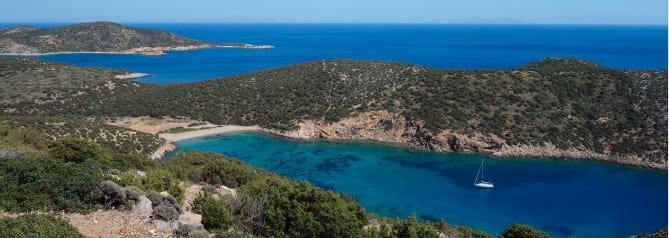
Hidden cove on the south coast, reached only by a 25-minute hike from Vathi or Platis Gialos. White pebbles, transparent sea, and usually only a handful of swimmers. A reward for the walk.
Best for: Hikers, escape seekers
View beach guide →Other coves, same island
Fasolou and Glyfo sit with the harbour beach at Faros — three swims, one village. Glyfo is the quieter pebble; Fasolou is the sandy, more sheltered one. A paved path links Glyfo to Apokofto and Chrysopigi.
Saoures is the small pebble side of the Chrysopigi rock, west of the monastery. Same visit as Apokofto, not a separate day.
Dialiskari is another name for Poulati, the pebble cove under Panagia Poulati. Lists that split them are counting the same water twice.
Gialoudia, Vlichada and Vlicho are roadless or near-roadless. Fine from a boat; a poor first-week plan if you only have a bus ticket. Practical notes: travel info. Ferries land in Kamares: Athens to Sifnos.
How to get to the beaches
KTEL buses from Apollonia reach Kamares, Platis Gialos, Vathi and Faros in high summer. Shoulder months thin out. A car or scooter is what unlocks Heronissos, Vroulidia, and hopping Chrysopigi then Faros on the same afternoon.
Fykiada is a walk from Vathi or Platis Gialos. Poulati and Seralia are walks from Kastro. Pack water; there is no kiosk on those paths.
If the bed is not booked yet, pick the village next to the beach you will actually use: where to stay.
Frequently asked questions
There is no single winner. Platis Gialos is the longest organised sand. Vathi is the calmest horseshoe. Kamares is the port swim on day one. Chrysopigi (Apokofto) is the photograph. Match the cove to the trip, then open that guide.
Vathi, Platis Gialos, Kamares, Apokofto under Chrysopigi, Fasolou at Faros, and Heronissos. Poulati, Seralia, Vroulidia and Fykiada are pebble or mixed.
Vathi, Platis Gialos and Kamares: sand, a shallow first step, tavernas, and a bus in high summer. Heronissos is the stillest north-coast water if you have a car. Skip Poulati and Vroulidia with a buggy.
South and south-east coves sit out of most of the northerly. Vathi, Platis Gialos, Faros (especially Fasolou) and Chrysopigi are the usual plan-B. Kamares and the north can chop in a strong July–August blow. Heronissos is a pocket of calm when the north is otherwise ugly.
Not for Kamares, Platis Gialos, and Vathi in season — KTEL from Apollonia covers those. Yes for Heronissos, Vroulidia, and a Faros–Glyfo–Chrysopigi day on your own clock. Fykiada and Poulati are walks. Taxis exist and are few; WhatsApp is how the island books them.
Platis Gialos is the most organised. Kamares and Vathi have stretches of beds and umbrellas in summer. Faros and Chrysopigi have a simpler setup. Vroulidia, Fykiada, Poulati and Seralia are BYO towel.
Yes, for arrival day, families, and west-facing sunsets. It is a real sandy bay, not leftover quay. Ferries still dock here, so you get some boat traffic. It is not the quietest swim on the island; it is the kindest first one.
Platis Gialos if you want length, sunbeds, and dinner on the sand without committing to silence. Vathi if you want a still horseshoe, pottery at the edge, and fewer scooters. Both are sandy. Both need a bus or a car from Apollonia.
May is possible and often sharp. October holds more of the summer sea than people expect, with fewer beds out. Warmest water is late August and September. Month-by-month: best time to visit.
Seralia is the harbour at the bottom of the steps. Poulati (also called Dialiskari) is a pebble cove under the monastery, a short hike. Neither is a family sand day. Faros is the next sandy cluster along the east.